
In the fields of modern life sciences, immunodetection, cell imaging, and molecular biology research, fluorescent dyes are core tools for realizing biomolecular visualization, quantitative detection, and dynamic tracking. Among numerous fluorescent dye systems, the Alexa Fluor (AF) series dyes, with their ultra-high brightness, extreme photostability, broad-spectrum pH tolerance, and excellent spectral resolution, have become the mainstream fluorescent labeling reagents in scientific research and in vitro diagnostics, widely applied in scenarios such as immunofluorescence staining, flow cytometry, fluorescence in situ hybridization (FISH), and multiplex fluorescence imaging. This article will comprehensively detail the core characteristics and application advantages of the Alexa Fluor series dyes from the perspectives of development history, molecular structure, and physicochemical properties.
The Alexa Fluor series dyes were born during the stage of breaking through the technical bottlenecks of traditional fluorescent dyes. In the mid-to-late 20th century, commonly used fluorescent dyes in biological research, including fluorescein (FITC), rhodamine (TRITC), and standard cyanine dyes (Cy series), had numerous shortcomings: fluorescein had low brightness, severe photobleaching, and stability only at neutral pH; traditional rhodamine dyes had poor water solubility and were prone to aggregation quenching; early Cy series dyes had insufficient photostability, were prone to signal attenuation after labeling, and had high spectral overlap in multicolor imaging, making it difficult to meet high-precision multiplex detection requirements.
In the 1990s, the well-known American biological reagent company Molecular Probes, based on the structural deficiencies of traditional fluorescent cores, launched a novel fluorescent dye R&D project. Through site-specific sulfonation modification and molecular structure optimization, they successfully developed the first generation of Alexa Fluor series dyes, solving the core pain points of traditional dyes. The naming convention of this dye series is highly distinctive, with the numerical suffix corresponding to the optimal excitation wavelength of the dye (in nm). For example, the optimal excitation wavelength of Alexa Fluor 488 is 488 nm, perfectly matching the mainstream light source of argon ion lasers and broadly adapting to conventional fluorescence detection equipment.
Through multiple rounds of iteration, the Alexa Fluor series has expanded from the initial visible light band dyes to a full-spectrum system covering ultraviolet, visible light, and near-infrared, spanning the 350 nm–790 nm wavelength range, with more than 20 standardized dye products developed.
The Alexa Fluor series dyes are not single-structure compounds, but a family of sulfonated derivatives modified based on three classical fluorescent cores. The core modification logic is to compensate for the structural deficiencies of traditional dyes through chemical modification. All categories follow a ternary structural system of "core luminescence + sulfonate group hydrophilicity + active group conjugation."
Depending on the emission wavelength band, Alexa Fluor dyes employ three types of classical fluorescent cores that determine the fundamental spectral characteristics of the dyes: the ultraviolet/blue light band (AF350/AF405) uses coumarin as the core; the green/yellow light band (AF488/AF532/AF546) uses fluorescein (xanthene) as the core; the orange-red/far-red/near-infrared band (AF555/AF647/AF680) uses rhodamine and cyanine as cores. The core structures retain the high fluorescence quantum yield advantage of traditional dyes, serving as the core foundation for dye luminescence.
This is the core innovative structure that distinguishes Alexa Fluor dyes from traditional dyes. The R&D team site-specifically introduced multiple sulfonate groups onto the traditional fluorescent core scaffold, enabling the dye molecules to carry stable negative charges. This structural modification brings three key advantages: first, it endows the dyes with extremely strong water solubility, eliminating the need for organic solvent solubilization and allowing biological labeling to be completed directly in aqueous systems, avoiding damage to biological samples from organic reagents; second, through charge repulsion, it effectively inhibits dye molecule aggregation, eliminating the fluorescence self-quenching phenomenon at high labeling densities; third, it significantly enhances molecular structural stability, broadening the pH tolerance range of fluorescence signals.
Commercialized Alexa Fluor dyes are all equipped with specific active reaction groups. The most commonly used is N-hydroxysuccinimide ester (NHS ester), while some premium categories are paired with optimized active groups such as tetrafluorophenyl ester (TFP ester) and sulfo-dichlorophenol ester (SDP ester). The active groups can undergo specific reactions with primary amine groups of proteins, antibodies, peptides, and amine-modified nucleic acids under mild physiological conditions (pH 7.2–8.5), forming stable irreversible amide bonds to achieve covalent labeling of biomolecules without destroying the biological activity of target molecules. Among them, TFP and SDP esters have stronger hydrolysis resistance and higher labeling reaction stability compared to traditional NHS esters, adapting to high-precision experimental scenarios.
The Alexa Fluor series is rich in categories, covering the full spectral range. Different products have highly differentiated spectral characteristics and application scenarios. The parameters and uses of mainstream core categories are as follows:
• Alexa Fluor 350 (Ultraviolet Blue Light): Excitation/emission wavelength 343 nm/441 nm, spectrally matched to coumarin and AMCA dyes. It is mainly used for ultraviolet channel labeling in multicolor imaging, adapting to specific staining of cell nuclei and certain proteins, commonly used in immunofluorescence and flow cytometry multicolor combination experiments.
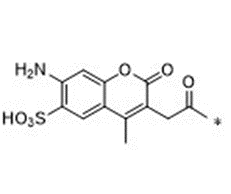
• Alexa Fluor 405 (Deep Blue): Excitation/emission wavelength 401 nm/422 nm, perfectly matching the 405 nm violet laser light source of flow cytometers. The fluorescence is stable with extremely low background, making it a fundamental dye for multicolor flow cytometry detection, commonly used for negative controls and baseline channel labeling.
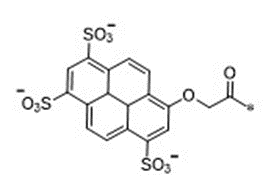
• Alexa Fluor 488 (Classic Green Light): Excitation/emission wavelength 499 nm/520 nm, spectrally highly similar to FITC, but with brightness, photostability, and pH tolerance far exceeding FITC. It is currently the most commonly used green fluorescent dye, widely used for cytoskeleton, membrane protein, and antibody labeling, adapting to the vast majority of green channel experiments such as laser confocal and high-resolution imaging.
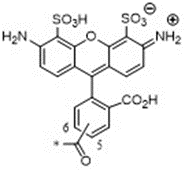
• Alexa Fluor 555 (Orange Light): Excitation/emission wavelength 553 nm/568 nm, spectrally almost perfectly matched to Cy3, directly compatible with Cy3-matched optical filters. Brightness and photostability significantly exceed Cy3 and TRITC dyes, with no obvious self-quenching at high labeling densities, making it the preferred dye for the orange light channel.
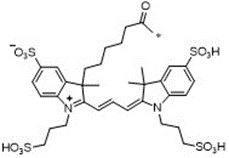
• Alexa Fluor 594 (Orange-Red Light): Excitation/emission wavelength 590 nm/618 nm, with vivid fluorescence color, high spectral recognition, and long fluorescence lifetime. Suitable for pairing with green and far-red dyes for three-color imaging, commonly used for fine staining of tissue sections and subcellular structure localization.
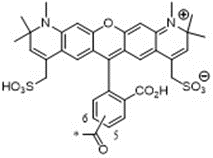
• Alexa Fluor 647 (Far-Red Light): Excitation/emission wavelength 650 nm/671 nm, benchmarked against Cy5 dye. It is the core dye for the far-red channel, with a molar extinction coefficient up to 270,000, extremely high brightness, excellent photostability, and extremely low background fluorescence. Suitable for trace antigen detection, super-resolution imaging, and long-term dynamic tracking.
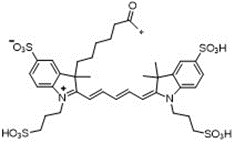
• Alexa Fluor 680 (Near-Infrared): Excitation/emission wavelength 681 nm/704 nm, benchmarked against Cy5.5 dye. The emission spectrum has no overlap with conventional red and green fluorescent dyes, specifically designed for three- to four-color multiplex imaging. Adapts to in vivo near-infrared imaging and deep tissue detection, effectively avoiding interference from biological tissue autofluorescence.
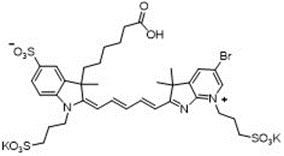
Based on unique molecular structure modifications, the Alexa Fluor series dyes possess physicochemical properties far exceeding those of traditional fluorescent dyes. All parameters are adapted to complex biological experimental environments, with core characteristics as follows:
This series of dyes has extremely high absorption coefficients, with most categories having molar extinction coefficients >80,000 cm⁻¹·M⁻¹. Among them, AF555, AF610, and other categories have extinction coefficients exceeding 130,000 cm⁻¹·M⁻¹, with extremely strong light absorption capability. At the same labeling density, the fluorescence brightness significantly exceeds that of traditional dyes. Additionally, the emission spectra of the dyes have narrow full-width at half-maximum and regular peak shapes, with extremely low spectral overlap between different categories. This allows easy realization of 4–7 color simultaneous imaging, perfectly adapting to multicolor fluorescence detection and FRET (Förster resonance energy transfer) experiments, with maximum FRET energy transfer efficiency reaching 84 Å, making it the preferred dye system for FRET experiments. Furthermore, the excitation wavelengths of all dyes precisely match the mainstream light sources of laser confocal microscopes and flow cytometers (405 nm, 488 nm, 532 nm, 633 nm lasers), maximizing equipment compatibility.
Photobleaching is a core pain point in fluorescence imaging, directly causing failure of dynamic observation and long-term imaging experiments. Alexa Fluor dyes, through sulfonate group structural modification, optimize the molecular electronic transition mechanism, significantly reducing the probability of molecular degradation under photoexcitation. The anti-photobleaching capability is several to tens of times that of traditional fluorescein and standard Cy dyes. Under continuous laser irradiation, the fluorescence signal attenuation rate is extremely slow, supporting long-term live cell dynamic imaging and high-resolution confocal multilayer scanning imaging without the need for frequent re-illumination or re-staining, significantly improving experimental stability and reproducibility.
Traditional fluorescent dyes (such as FITC) have fluorescence intensity highly susceptible to pH fluctuations, stable only in the narrow range of pH 7.0–7.5, and cannot adapt to complex biological environments such as acidic organelles and alkaline body fluids. In contrast, the fluorescence excitation, emission spectra, and fluorescence intensity of the Alexa Fluor series dyes show virtually no fluctuation within the ultra-wide range of pH 4.0–10.0, unaffected by physiological environmental pH changes. They can be stably used for labeling detection in various scenarios including intracellular acidic vesicles, tissue sections, and body fluid samples.
Multiple sulfonate groups endow the dyes with excellent water solubility, allowing complete dissolution in pure water and conventional biological buffers. The entire labeling reaction requires no organic solvents such as methanol or DMF, avoiding issues such as biological protein denaturation and cell damage. Simultaneously, the dye molecule charges are stable, and labeling does not alter the original polarity and biological activity of target biomolecules. There is no obvious cytotoxicity, making them compatible with high-end experiments such as live cell labeling, in vivo imaging, and in vivo tracking. Additionally, dye conjugates are not prone to aggregation and precipitation, with excellent long-term storage stability, effectively reducing experimental errors.
Alexa Fluor series dyes generally possess high quantum yields and long fluorescence lifetimes, with most categories maintaining fluorescence lifetimes of 3–4 ns, high luminescence efficiency, and low background fluorescence. Compared to traditional dyes, their labeled products have stronger effective fluorescence output and extremely low non-specific fluorescence interference, significantly improving imaging clarity and detection sensitivity, adapting to quantitative detection of trace biomolecules.
The core advantage of the Alexa Fluor series dyes lies essentially in solving the four major pain points of traditional fluorescent dyes—poor water solubility, severe photobleaching, pH sensitivity, and susceptibility to quenching—through precise molecular structure modification. Its comprehensive characteristics of full-spectrum coverage, high brightness, high stability, high compatibility, and low background make it widely applied in biological fluorescence labeling. From basic research applications including cell imaging, protein localization, and gene detection, to clinical diagnostic applications including immunofluorescence screening, flow cytometric analysis, and pathological section detection, to high-end applications including super-resolution imaging, live cell dynamic tracking, and FRET molecular interaction experiments, the Alexa Fluor series dyes are all adaptable. As life science research develops toward high-precision, dynamic, and multidimensional directions, this series of dyes will continue to occupy an irreplaceable core position in the biological labeling field through continuous technological iteration.