A complete paraffin IHC experiment involves a series of continuous procedures including deparaffinization, hydration, antigen retrieval, endogenous enzyme blocking, antibody incubation, chromogenic detection, and counterstaining. After each step, thorough washing with TBS or PBS buffer is required before proceeding to the next, resulting in lengthy overall steps and complex workflow chains, which are the main bottlenecks restricting laboratory detection throughput and work efficiency. Since paraffin sections undergo wax infiltration and embedding solidification during preparation, wax within and on the tissue completely seals antigen sites, directly blocking specific antigen-antibody binding. Therefore, thorough deparaffinization, gradient hydration, and antigen retrieval must be completed in the early stage of the experiment. In traditional technical systems, these three core procedures must be carried out sequentially in separate steps, with strict operational specifications and lengthy time consumption. The standard traditional workflow first requires multiple xylene immersions for deparaffinization, each immersion lasting 5-10 minutes to ensure complete dissolution of deep tissue wax; then sequential gradient ethanol hydration at 100%, 95%, 80%, and 70% to gradually replace organic solvents in the tissue, protecting cell morphology integrity while creating conditions for subsequent reagent penetration; finally, a dedicated antigen retrieval buffer needs to be prepared, and thermal antigen retrieval is performed through high-temperature high-pressure, water bath boiling, or microwave heating to break protein cross-linking structures generated during formalin fixation, re-expose sealed antigen epitopes, and after retrieval, natural cooling to room temperature and multiple rinses are required. The entire pre-processing workflow takes over 1.5 hours of pure operation and waiting time, with fragmented procedures, many waiting nodes, and requiring manual supervision throughout, greatly occupying experimental manpower and equipment resources, which is also the core root cause of poor reproducibility, large batch differences, and low overall efficiency in traditional IHC experiments.
Addressing the many technical bottlenecks and practical pain points of traditional paraffin IHC pre-processing workflows, through formulation iteration and process optimization, the IHC field has achieved a key technical innovation: the three independent procedures required for paraffin section experiments — deparaffinization, gradient ethanol hydration, and antigen retrieval — can be perfectly integrated and completed in one step through dedicated integrated reagents. This technology is not a simple reduction of experimental steps, but through molecular formulation reconstruction and reaction system optimization, on the basis of completely preserving and even upgrading experimental standards, it breaks through the technical barriers of traditional stepwise reactions, achieving a disruptive upgrade of the pre-processing workflow, fundamentally solving the industry problems of low efficiency, large errors, and poor safety in traditional experiments, providing a brand-new solution for standardized, rapid, and safe IHC experiments.
The core logic of the one-step integration technology relies on a precisely proportioned composite functional reagent system to achieve synchronized and efficient execution of multiple reactions. The dedicated integrated reagent carries efficient paraffin dissolution components, mild hydration regulatory factors, and precise antigen activation factors, with the three functional components acting synergistically without antagonizing each other: among them, the paraffin dissolution component can quickly and thoroughly penetrate deep tissue layers of sections, efficiently dissolve solidified wax, completing thorough deparaffinization; the hydration regulatory factor can precisely simulate the traditional gradient ethanol hydration environment, smoothly replace organic impurities in the tissue, protect tissue morphology integrity, and avoid cell structure damage and detachment; the antigen activation factor can, under adapted temperature control conditions, gently cleave protein cross-linking structures caused by formalin fixation, precisely expose sealed antigen epitopes, perfectly replicating or even optimizing the effects of traditional antigen retrieval. The entire reaction starts and completes synchronously, without stepwise solution changes, without multiple immersions, and without long cooling waiting, covering all experimental purposes of traditional multi-step procedures at once.
It is worth emphasizing that this one-step technology is a technical innovation for improving quality and efficiency, not a simplified workflow reduction with lowered standards. In traditional stepwise operations, multiple solution changes, temperature fluctuations, and uneven reagent action time can all lead to tissue damage, antigen loss, or insufficient retrieval; whereas the integrated reagent system has a constant reaction environment, uniform and mild reagent action, no unnecessary manual intervention throughout the process, maximally avoiding human operational errors and environmental interference. The degree of deparaffinization, hydration effect, and antigen retrieval intensity of all sections are highly unified, significantly improving the clarity, specificity, and reproducibility of IHC staining, making experimental results more aligned with scientific research data standards and experimental reproducibility requirements.
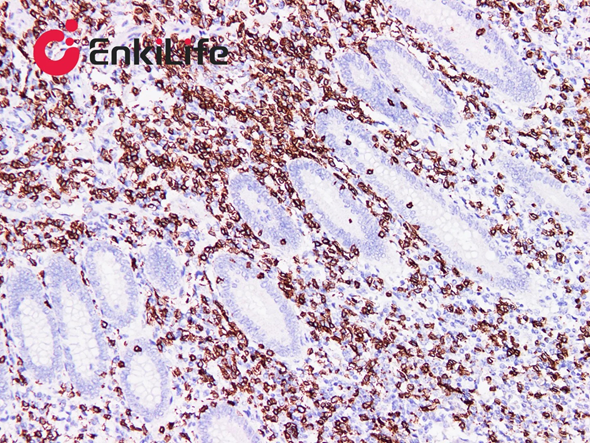
Based on this disruptive one-step core technology, EnkiLife has deeply cultivated pathological experiment technology R&D and launched the Ultra-Fast & Ultra-Sensitive Immunohistochemistry Kit, specifically designed for paraffin section IHC experiments, achieving deep implementation of innovative technology with clinical and scientific research practical scenarios. The kit abandons the traditional outdated stepwise experimental system, with five core advantages of "ultra-fast and efficient, safe and non-toxic, stable performance, one-stop complete supply, and zero-threshold operation", reconstructing new standards for IHC experiments, comprehensively solving pain points such as low efficiency, high risk, poor reproducibility, and cumbersome supporting requirements of traditional experiments, adapting to full-scenario usage needs including hospital pathology departments at all levels, university laboratories, scientific research institutions, and pharmaceutical company R&D centers.
This kit is equipped with an exclusive one-step deparaffinization/antigen retrieval solution, which breakthroughly merges the three core procedures of deparaffinization, gradient hydration, and antigen retrieval that traditionally take over 1.5 hours into one step. No xylene deparaffinization needed, no gradient ethanol hydration needed, no separate retrieval solution preparation needed, no prolonged cooling rinsing needed. The entire pre-processing workflow duration is dramatically compressed, saving over 60% of pre-processing time compared to traditional workflows, and the overall IHC complete experiment cycle is significantly shortened. Single-batch sample detection efficiency is significantly doubled, perfectly adapting to the needs of high-throughput scientific sample screening and batch experiment replication validation, saying goodbye to the lengthy time consumption and sample backlog problems of traditional IHC experiments, greatly improving overall laboratory operational efficiency.
Safety is one of the core differentiated advantages of this kit, completely disrupting the traditional high-risk operation mode of IHC experiments. The kit's core deparaffinization retrieval solution uses a brand-new eco-friendly non-toxic formulation, strictly eliminating all volatile toxic and harmful solvents such as xylene and benzene series, with no irritating odor, no toxic volatile substances, and no high-risk waste liquid pollution. The entire experiment process does not rely on specialized equipment such as fume hoods or high-temperature high-pressure devices, and all pre-processing operations can be completed on conventional clean laboratory benches. It not only eliminates chronic damage to experimenters' bodies from toxic reagents at the source, comprehensively protecting occupational health of experimenters; but also significantly reduces laboratory hazardous waste treatment costs and equipment dependency costs, avoiding safety hazards of organic solvent use, achieving green, safe, and low-consumption IHC experiments.
To maximally simplify the experimental workflow and lower experimental thresholds, the kit adopts a full-process one-stop supporting design, equipped with all core reagents needed for paraffin IHC experiments from pre-processing to chromogenic counterstaining, without requiring users to purchase any additional supporting consumables. The kit includes highly compatible endogenous peroxidase blocker, dedicated high-compatibility antibody diluent, high-sensitivity Polymer-HRP secondary antibody, stable DAB chromogenic solution, and standardized hematoxylin counterstaining solution. All reagents have undergone system adaptation optimization, with compatible components and complementary performance, eliminating problems such as poor compatibility, abnormal chromogenic detection, and unstable signals that occur when reagents from different brands are used together. It also comes with a standardized, simplified operation workflow with clear steps and high fault tolerance, allowing zero-experience beginners to quickly get started, and experienced personnel to efficiently operate in batches, balancing professionalism and practicality, truly achieving ready-to-use out of the box.
This step is the core innovation of the product, replacing traditional multi-step cumbersome pre-processing procedures at once. Pour the 1× deparaffinization/antigen retrieval buffer working solution provided with the kit into a retrieval jar and heat to boiling. Adjust to medium-low heat to maintain a stable gentle boiling state, then place the paraffin section, ensuring the liquid completely submerges the tissue. Continue heating at medium-low heat for 15-30 minutes, maintaining gentle boiling throughout to avoid tissue drying and reagent overflow. After heating is complete, remove from heat source and let it cool naturally at room temperature. No xylene deparaffinization needed, no gradient ethanol stepwise hydration needed, no separate retrieval solution preparation needed, greatly simplifying pre-processing procedures.
Operation Note: Never place sections directly into vigorously boiling reagent, to avoid reagent overflow and tissue displacement. Wait until the gentle boiling state stabilizes before placing sections.
Remove the cooled section and thoroughly rinse with deionized water to remove residual retrieval solution. Then apply endogenous peroxidase blocker to the tissue surface and incubate at room temperature for 15-20 minutes to block endogenous enzyme activity and reduce non-specific chromogenic interference. After incubation, wash uniformly with PBST buffer 3 times, 3-5 minutes each time, to wash away residual reagents.
According to experimental needs, use the kit's dedicated antibody diluent to dilute the primary antibody at an adapted ratio. Cover the tissue uniformly with the prepared primary antibody working solution, and choose either overnight incubation at 4℃ or constant temperature incubation at 37℃ for 1 hour. After primary antibody incubation is complete, wash thoroughly with PBST 3 times; then add high-sensitivity Polymer-HRP secondary antibody and incubate at room temperature for 30-60 minutes. After incubation, complete routine washing with PBST again to ensure specific antigen-antibody binding effect.
Prepare DAB chromogenic working solution fresh, apply uniformly to the tissue surface, dynamically observe the chromogenic effect under a microscope, and immediately rinse with distilled water or buffer to terminate the reaction when chromogenic detection is appropriate. Then apply hematoxylin staining solution and incubate at room temperature for 2-5 minutes, followed by bluing treatment with alkaline solution. After the section dries, mount with neutral balsam, and finally complete microscopic examination and analysis under an optical microscope.
EnkiLife Ultra-Fast & Ultra-Sensitive Immunohistochemistry Kit relies on innovative one-step pre-processing technology, effectively optimizing the operation mode of traditional IHC experiments. While improving experimental efficiency and lowering operational thresholds and experiment risks, it ensures the stability and reliability of staining results. In life science research scenarios, it can adapt to various routine experimental screening and mechanism exploration work, effectively improving sample detection efficiency and optimizing experimental workflows, providing high-quality experimental basis for various molecular mechanism research and protein function analysis; it can also reduce experimental deviations caused by manual operation, adapt to high-throughput sample detection and replication experiment needs, and can widely support research directions such as tumor mechanism research, target validation, and drug R&D. The product adapts to multiple research scenarios including university research laboratories, scientific research institutes, and pharmaceutical company R&D, providing a brand-new boost for the efficient conduct of life science research with a lightweight, safe, and standardized experimental solution.